Modern BMW, Mercedes-Benz, and Audi vehicles contain dozens of electronic control units — modules that govern everything from engine management and transmission control to seat memory, adaptive lighting, and collision avoidance. This complexity delivers a remarkable driving experience, but it also means that electrical faults can be subtle, intermittent, and notoriously difficult to diagnose without the correct tools.
At Revolution Automotive in Norwood, MA, electrical diagnostics are one of our most-requested services — and one of our most important capabilities. Here's what we see most often.
Battery and Charging System Problems
The single most common electrical issue we see on European vehicles is battery failure — and it's more complex than it sounds. BMW, Mercedes, and Audi all use AGM (Absorbent Glass Mat) batteries that require registration to the vehicle's battery management system (BMS) when replaced. If a new battery is installed without registration, the BMS continues to charge the new battery based on the old battery's history, which can reduce battery life by years.
Important
If your European vehicle's battery is replaced anywhere other than a shop with factory-level diagnostic software, insist that they perform the battery registration procedure. A battery replaced without registration at a Norwood big-box auto parts store may fail within 12–18 months.
Module Communication Failures
European vehicles communicate between modules over a CAN bus network — a high-speed communication protocol that allows dozens of control units to share data simultaneously. When a module fails or a communication error occurs, symptoms can appear in completely unrelated systems. A failed body control module might prevent the windows from working and trigger a transmission warning — because the transmission module can't communicate with the body module to confirm the gear selector position.
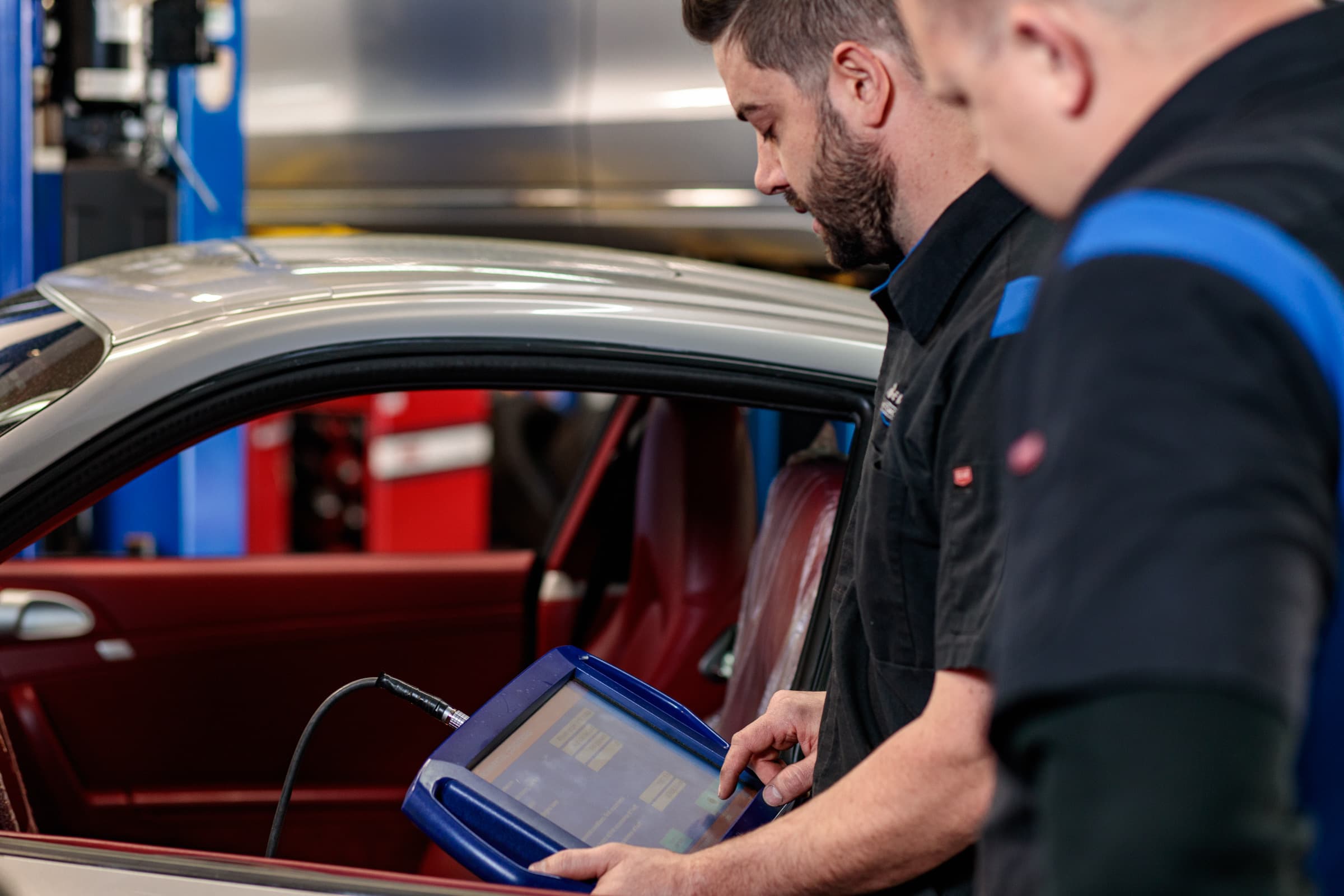
Correctly diagnosing CAN bus faults requires reading fault codes from every module on the vehicle — not just the one that seems affected — and understanding the communication architecture of the specific vehicle. This is why generic code readers fail here: they can't access most of the modules on a European vehicle.
Most Common Electrical Failures by Brand
- •BMW: Footwell module (FRM) failures, VANOS solenoid faults, fuel pump relay failures, DSC module issues
- •Mercedes-Benz: SAM (Signal Acquisition Module) corrosion, EIS ignition switch failures, COMAND nav unit issues, throttle actuator motor faults
- •Audi: MMI controller failures, electro-mechanical parking brake faults, throttle body adaptation issues
- •Porsche: PDK module faults, PASM (active suspension) module issues
- •Mini Cooper: Body control module corrosion — especially common in older Norwood winters with road salt exposure
- •Land Rover: Terrain Response module faults, air suspension control module issues
Our Electrical Diagnostic Process in Norwood, MA
Electrical diagnosis is not guesswork. We follow a structured process for every electrical complaint:
- 1.Full vehicle scan with factory software — reading every module, not just the engine
- 2.Fault code analysis — distinguishing current faults from stored historical faults
- 3.Live data review — observing actual sensor and module outputs in real time
- 4.Targeted physical testing — checking wiring, connections, and component outputs at the circuit level
- 5.Root cause confirmation before recommending any parts replacement
Pro Tip
Intermittent electrical problems are the hardest to diagnose. If your issue only happens sometimes, note when it occurs — temperature, time of day, speed, recent events. This context dramatically narrows the diagnostic process.