The check engine light is the most misunderstood warning light on any dashboard — and on a European vehicle, it's even more nuanced. BMW, Mercedes-Benz, Audi, Porsche, Mini, and Land Rover all use proprietary diagnostic systems that go well beyond generic OBD-II codes. When that amber light comes on for a Norwood, MA driver, the question isn't just "what's the code?" — it's "what does this code actually mean for this specific vehicle?"
Solid vs. Flashing: Two Very Different Situations
Before anything else, understand the difference between a solid check engine light and a flashing one.
- •Solid check engine light: An issue has been detected and stored. The car is usually safe to drive, but the issue should be diagnosed soon — within a week or two at most.
- •Flashing check engine light: This indicates an active misfire that is currently damaging the catalytic converter. Pull over as soon as safely possible and do not continue driving. Ignoring a flashing check engine light can turn a $200 repair into a $2,000+ catalytic converter replacement.
Important
If your check engine light is flashing and accompanied by rough running, reduce speed and pull over. This is not a "drive to the shop tomorrow" situation — it is a stop-now situation.
Common Check Engine Light Causes in European Cars
The range of possible causes is wide, but these are the most common issues our technicians diagnose on European vehicles in the Norwood, MA area:
- •Oxygen sensor failure — very common on high-mileage BMW and Mercedes engines
- •EVAP system leak — often triggered by a loose or worn fuel cap; common after filling up at the Canton or Norwood gas stations on Route 1
- •Catalytic converter efficiency below threshold — common on older Audis and Mini Coopers
- •Mass airflow sensor contamination — BMW and Mercedes air intake systems can accumulate debris
- •Ignition coil or spark plug failure — causes misfires, especially on BMW inline-6 and V8 engines
- •VANOS or variable valve timing fault — specific to BMW engines
- •Thermostat failure — Mercedes-Benz is particularly prone to thermostat housing failures on M271 and M272 engines
- •Turbocharger boost pressure fault — common on Audi 2.0T and BMW 2.0T engines
Why a Generic Code Reader Isn't Enough
The auto parts store down the road will read your OBD-II codes for free — and for a domestic vehicle, that's often a useful starting point. For European vehicles, it's frequently misleading. Here's why:
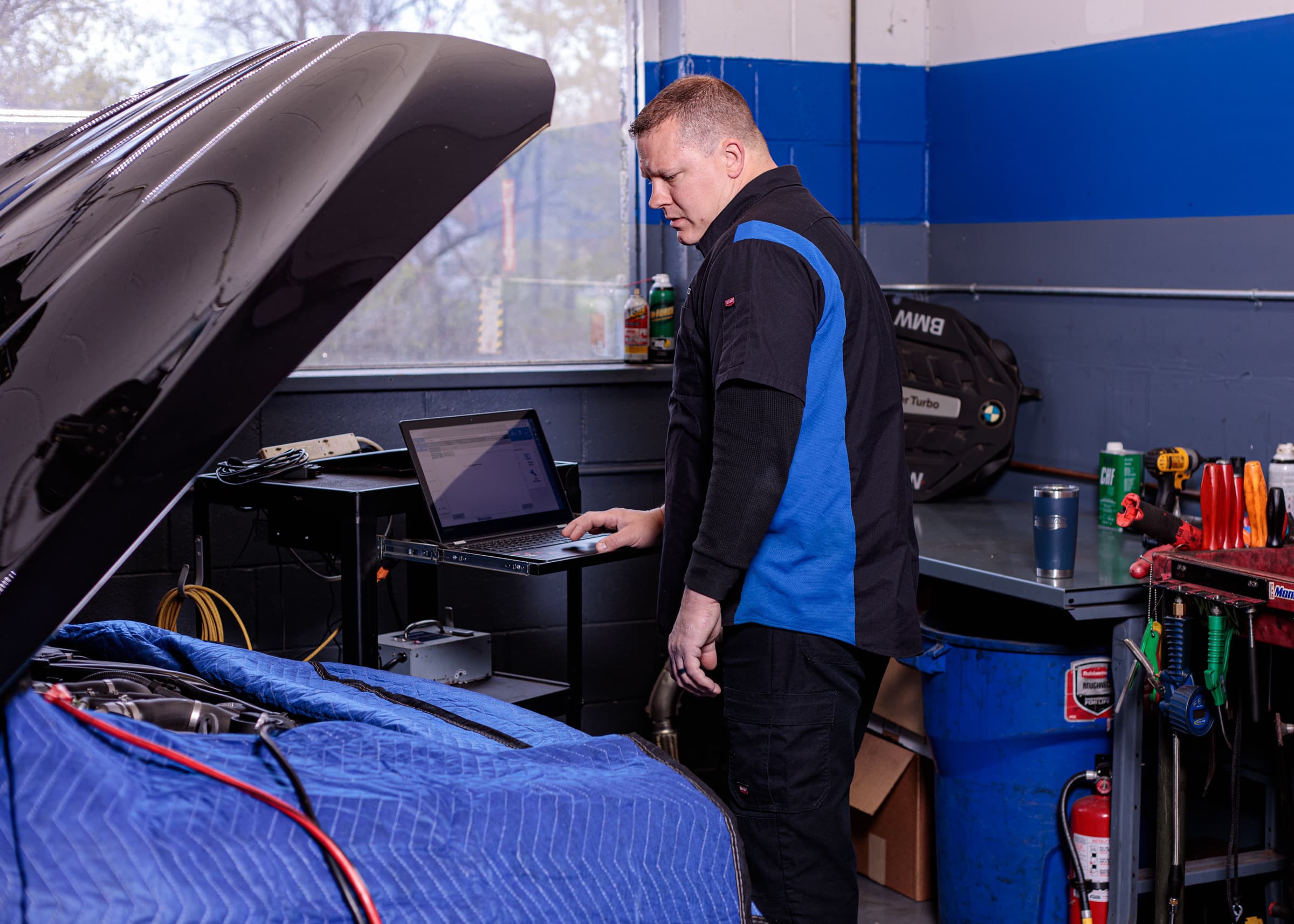
BMW, Mercedes, Audi, and Porsche all store fault codes in proprietary formats that generic OBD-II scanners misinterpret. A generic scanner might read a P0128 "thermostat malfunction" code on a BMW, when the actual BMW-specific code reveals a more nuanced issue with the coolant temperature model — requiring a different repair. At Revolution Automotive, we use ISTA (BMW), Xentry (Mercedes), ODIS (Audi/VW), and Piwis (Porsche) — the same diagnostic software used by franchised dealers.
Pro Tip
After having a code cleared at an auto parts store, the check engine light will often return within a few drive cycles if the underlying issue wasn't fixed. This can also delay us from seeing the original fault code.
What Happens During Engine Diagnostics at Revolution Automotive
When you bring your vehicle to our Norwood, MA shop for a check engine light, here's what we do:
- 1.Full fault code scan across all vehicle modules — not just the engine, but transmission, ABS, airbag, and body control systems
- 2.Live data review — we look at actual sensor readings in real time, not just stored codes
- 3.Visual inspection of the relevant systems based on the fault codes
- 4.Clear explanation of findings, repair options, and honest pricing before any work begins
- 5.Repair performed with OEM-quality parts, then post-repair verification scan to confirm the fault is resolved